HAPS Compare Satellites And Haps: Which Wins In Stratospheric Coverage?
1. The Question in Its Own Way reveals an Evolution in the Way We View Coverage
For nearly 3 decades, debate about reaching remote and under-served regions from above was framed as a choice between satellites and ground infrastructure. The rise of feasible high-altitude platform stations has brought a third option that doesn't seem to be in a neat way and that's what makes this comparison fascinating. HAPS aren't looking to replace satellites everywhere. They're competing in specific cases where the physics of operating at 20km rather than 500 or 35,000 miles yields better results. Recognizing where that advantage is genuine and what it doesn't in the end is the essence of the game.
2. This is the place where HAPS will win Simply
The time for signal travel is determined by distance. Distance is where stratospheric platforms enjoy the advantage of having a clear structural advantage over any orbital system. Geostationary satellites sit approximately 35,786 kilometres above the equator. It produces an average round-trip latency of 600 milliseconds. This makes it suitable in voice calls with an obvious delay, however it is not ideal for real-time applications. Low Earth orbit satellites are able to improve this significantly working at 550 – 1,200 kilometers, with latency between the 20 to 40 millisecond range. A HAPS-equipped vehicle traveling at 20 kilometres produces latency figures equivalent to terrestrial networks. For applications where responsiveness matters such as industrial control systems emergency communications, financial transactions direct-to-cell connectivity the difference isn't just marginal.
3. Satellites Win on Global Coverage And That's What's Important
There is no stratospheric system currently in development that can cover the entire earth. It is true that a single HAPS vehicle can cover a regional footprint that is large by terrestrial standards but not a complete. Global coverage requires an array of platforms spread across the globe, each with its own operating system, energy systems, and station keeping. Satellite constellations and networks, especially the large LEO networks, can cover the planet with overlapping covering in ways which stratospheric structures simply isn't able to replicate using current vehicle counts. For applications that require a truly universal reach (marine tracking, global messaging, polar coverage — satellites remain the only credible option at size.
4. Resolution and Persistence Favour The HAPS Program for Earth Observation
If the mission requires monitoring the area constantly -the monitoring of methane emissions along an industrial area, observing the progress of a wildfire unfold in real-time or monitoring the oil pollution being released from an offshore incident — the continuous and close-proximity character of a stratospheric platform can produce data quality that satellites are unable to achieve. Satellites operating in low Earth orbit moves over any particular point on the surface for minutes at time while revisit intervals are measured by hours or days, depending on constellation size. A HAPS vehicle that stays above the same area for weeks, provides continuous observations with sensor proximity that provides superior spatial resolution. If you are looking to observe the stratospheric environment that endurance is usually valued more than its global reach.
5. Payload Flexibility Is an HAPS Advantage Satellites. simply match
Once a satellite is set to launch, the payload fixed. Making changes to sensors, swapping hardware, or adding new instruments requires launching an entirely new spacecraft. A stratospheric platform returns to earth after missions and its payload is able to be upgraded, reconfigured or replaced completely as requirements for missions change or advances in technology become available. The airship's design allows for important payload capacity, making possible combinations of telecommunications antennas sensor for greenhouse gases, as well as disaster detection systems within the same platform This flexibility requires multiple satellites to replicate each with a distinct charge for creation and orbital slot.
6. The Cost Structure is Significantly Different
Launching a satellite requires rocket costs in terms of insurance, ground segment development and acceptance of the fact that hardware failures in orbit will be permanent write-offs. Stratospheric platforms operate like aircrafts, and can be recovered, examined or repaired before being repositioned. However, this doesn't guarantee that they're cheaper than satellites, on a basis of coverage area, but it alters the risk-reward profile and the costs of upgrades dramatically. For companies that are trying out new services or entering new markets, being able to retrieve and change the platform rather in accepting hardware orbitals as sunk-cost provides a significant operational advantage especially in the initial commercialization phase that the HAPS segment is facing.
7. HAPS may be able to act as 5G Backhaul, Where Satellites Are Not effectively
The telecommunications framework that's enabled by a high-altitude platform station operating as a HIBS — effectively one of the cell towers in sky and is designed to communicate with wireless network protocols in a way that satellite connection traditionally hasn't. Beamforming a telecom stratospheric antenna allows for dynamic allocation of signals across a larger coverage area, supporting 5G backhaul to ground infrastructure and direct-to-device connections simultaneously. Satellites are becoming increasingly efficient to support this technology, but the nature of operating closer to the ground affords stratospheric devices an advantage in signal quality, strength and frequency and compatibility to spectrum allocations designed for terrestrial networks.
8. Operational Risk and Weather Differ significantly between the Two
Satellites that are stable in orbit, remain largely unaffected to weather conditions in the terrestrial. A HAPS vehicle operating in the stratosphere will face more challenging operational conditions stratospheric winds patterns, temperature gradients, and the engineering challenge of managing nights at altitude, without losing station. The diurnal cyclic, or the every day rhythm of solar energy availability as well as the power draw of overnight is a design restriction each solar-powered HAPS is required to address. New developments in lithium sulfur battery energy capacity along with solar cell efficacy are closing this gap, but it's the real operational problem which satellite operators aren't required to encounter in the same way.
9. The truth is They Are Serving Different Missions.
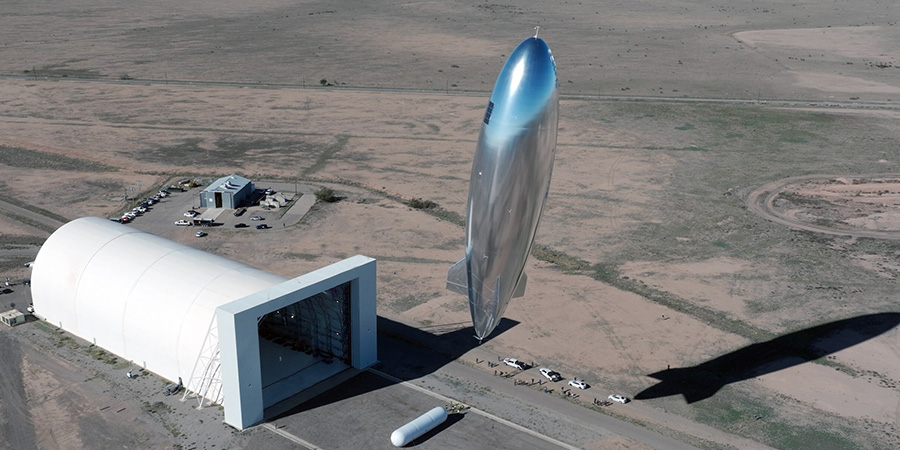
Framing HAPS versus satellites as an all-or-nothing contest misses the point of how non-terrestrial infrastructure is likely to develop. A more accurate picture is a layered model in which satellites have global reach and applications where universal coverage tops everything else while stratospheric platforms aid in regional persistence missions -connectivity in challenging geographical environments, continuous environmental monitoring along with disaster mitigation, and 5G expansion to areas where it is not economically feasible to roll out terrestrial networks. Sceye's position reflects precisely what it says: a mobile platform created to handle things within an area, in long-term timeframes, using a sensor and communications payload that satellites can't efficiently replicate at this altitude or proximity.
10. The Competition Will In the End Sharpen Both Technologies
It is possible to argue that the rise of reputable HAPS programmes has accelerated developments in satellite technology, and in turn. LEO satellite operators have advanced both coverage and latency ways that set the bar higher HAPS have to meet the requirements of competing. HAPS developers have proven their regional monitoring capabilities, which are prompting satellite operators reconsider revoking frequency and sensors resolution. The Sceye and SoftBank partnership targeting Japan's nationwide HAPS network, including pre-commercial services planned for 2026 is among the most clear evidences yet that stratospheric platforms have gone from a mere competitor to active participant in shaping the way that the non-terrestrial communication and monitoring market develops. Both technologies are more suitable to withstand the pressure. Have a look at the recommended non-terrestrial infrastructure for website examples including sceye connectivity solutions, sceye haps softbank partnership, Beamforming in telecommunications, Sceye Wireless connectivity, sceye haps airship status 2025 2026, what's the haps, softbank haps pre-commercial services japan 2026, sceye haps softbank partnership, Stratospheric missions, softbank investment sceye and more.

SoftBank'S Haps Pre-Commercial Services: What Can We Expect In 2026?
1. Pre-Commercial Is A Specific and significant Milestone
The use of terms is crucial in this. Pre-commercial services comprise one distinct stage of the creation of any new communication infrastructure — going beyond the experimental demonstration, beyond proof-of-concept flying campaigns, and into territory where real users receive real-time service in conditions that approximate what a fully commercial implementation would look like. This means that the platform can be functioning reliably, and the signal is in compliance with quality thresholds that real-world applications rely on and the ground infrastructure communicates with the spheric telecom antenna accurately, and that the necessary regulatory clearances are in place for the system to operate in areas that are populated. Achieving pre-commercial status isn't something that is a marketing goal. It's an operational one in addition, the very fact SoftBank has announced its intention to the goal through Japan in 2026 is a bar that the engineering on both partners of the partnership have to meet.
2. Japan is the perfect country to Start This First
It is clear that choosing Japan as the ideal location for stratospheric pre-commercial services isn't arbitrary. Japan has a collection of characteristics that make it perfect as a possible first deployment setting. The terrain of the country — mountainous terrain with thousands of inhabited islands, long and complex coastlines -creates real problems in coverage that the stratospheric network is designed to address. Its regulatory environment is sophisticated enough to deal with the spectrum and airspace challenges that stratospheric activities raise. The mobile network infrastructure, managed by SoftBank, provides the integration layer that a HAPS platform needs to connect to. The population of the country has the device ecosystem as well as the digital literacy needed to utilize stratospheric broadband services without needing an extended period of technological adoption that would hinder meaningful growth.
3. Expect Initial Coverage to Concentrate On Underserved Areas and Strategically Important Areas
Pre-commercial deployments won't be able to cover an entire country simultaneously. It's more likely to be the focus of the deployment to areas that are where the gap between existing coverage and the kind of connectivity that stratospheric can bring is the largest, and where the strategic argument for prioritizing coverage is strongest. In Japan's context, this is the case for island communities that are currently dependent on costly and limited Satellite connectivity. Also consider mountainous rural areas with terrestrial network economies that have failed to provide adequate infrastructure, coastline zones that disaster resilience is an important national objective due the nation's exposure to typhoons and seismic events. These zones provide the clearest evidence of connectivity's utility and offer the most useful operational data for refining coverage, capacity, as well as monitoring of platforms before the rollout to larger areas.
4. The HIBS Standard Is What Makes Device Compatibility Possible
One of the things that people should ask when discussing stratospheric Internet would be whether they require specialist receivers or works with ordinary devices. For the most part, the HIBS framework is High-Altitude IMT Base Station -is the result of a standards-based solution to this question. In conforming to IMT standards that power 5G and 4G networks worldwide, this stratospheric-based platform operating as a High-Altitude IMT Base Station is compatible with the device and smartphone ecosystems that are already in the coverage area. For SoftBank's services that are pre-commercial, that means users in area coverage should be in a position gain access to stratospheric connections via their current devices without having to buy hardware. This is a key aspect for any company that seeks to connect with the people who live in remote areas who require alternative connectivity options, and are not well-positioned to afford the expensive equipment.
5. Beamforming is the process that determines how Capacity Is Dispersed
An stratospheric location that covers a vast area won't offer a consistent amount of capacity over the footprint. What spectrum and signal power is allocated to cover the whole area is a function of beamforming capability — the platform's ability to direct its signal to the areas where demand and users are concentrated rather than broadcasting equally across vast areas that aren't inhabited. For SoftBank's commercial phase, showing that beamforming using an spheric telecom antenna is able to supply commercially sufficient capacity certain areas of a vast coverage area will be as important as demonstrating the coverage area. Broad coverage area with a tiny, unusable capacity proves little. Targeted delivery of genuinely acceptable broadband to defined area of service demonstrates the commercial model.
6. 5G Backhaul Application may Precede Direct-to-Device Services
In certain scenarios of deployment, the first and most straightforward way to establish the reliability of stratospheric connectivity isn't direct connectivity to consumers, but 5G backhaul, which connects existing ground infrastructures in areas that have terrestrial backhaul which is insufficient or unavailable. Remote communities may have an equipment for network connectivity at ground level but do not have the capacity connection to the wider network that makes it useful. The stratospheric technology that provides that backhaul connection extends 5G coverage for communities serviced by ground equipment that is already in place without needing end users to communicate with the stratospheric systems directly. This usage scenario is much easier to test technically, produces concrete and quantifiable value and helps build operational confidence in service performance before a advanced direct-to devices service layer is added.
7. The Sceye Platform's Performance 2025 Sets the stage for 2026.
The pre-commercial services target for 2026 is entirely contingent on what it is that the Sceye HAPS airship achieves operationally in 2025. Validation of stations-keeping, performance of payloads under real atmospheric conditions, energy system performance across several diurnal cycles, and the integration tests required to verify that the platform's interface is correct with SoftBank's infrastructure for networks all require sufficient maturity before commercial services can be launched. Updates on Sceye Airship status of HAPS up to 2025, therefore, aren't just informational items, they represent the most significant indicators of whether the 2026 milestone is on time or has accumulated the kind as technical debt extends commercial timelines to the side. In 2025, the progress made by engineers will determine the 2026 story being planned in advance.
8. Disaster Resilience will be an Ability Tested, Not just a Claim One
Japan's disaster-prone nature means that any stratospheric or precommercial service operating across the nation will almost always encounter circumstances — earthquakes, typhoons, disruptions to infrastructure- that test the reliability of the platform and its effectiveness as emergency communications infrastructure. It's not a limitation of the operational context. It is one of the finest features. A stratospheric platform that operates a station and continues to provide access to connectivity and observation during any significant earthquake or weather event in Japan provides a proof point that no quantity of controlled tests could reproduce. The SoftBank pre-commercial phase will provide actual evidence on how stratospheric infrastructure performs in the event of terrestrial networks being compromised — exactly the kind of evidence that any other potential operators in affected countries must see before committing to their own deployments.
9. The Wider HAPS Investment Landscape Will Respond to What Happens in Japan
It is true that the HAPS industry has attracted significant investments from SoftBank and others, but the wider telecoms and infrastructure investor community is still an alert. Large institutional investors, telecoms operators in other nations and government officials who are looking at stratospheric networks for their own coverage and monitoring needs are all monitoring what is happening in Japan and paying close attention. A successful launch of precommercial infrastructure -platforms on station operations, service operational, and performance metrics that meet thresholdscould accelerate investment decisions across the industry in ways that continuing pilot flights, and announcements of partnerships cannot. However, serious delays or performance gaps will require an adjustment of timelines throughout the sector. The Japan deployment is of a significant weight for the whole stratospheric connectivity sector, not just those involved in the Sceye SoftBank partnership specifically.
10. 2026 Will Show Us Whether Stratospheric Connectivity has crossed the Line
There is a line in the evolution of any revolutionary infrastructure technology between the point at which it is promising and the time when it's fully realized. The aviation, electric, mobile networks and internet infrastructure all crossed that boundary at certain timesand not just when this technology first demonstrated but when it was beginning to function reliably to have institutions and citizens contemplating its existence rather then its potential. SoftBank's initial commercial HAPS services in Japan are the most credible potential candidate in the near term for when stratospheric connectivity is crossing that line. Whether the platforms hold station through Japanese winters, whether the beamforming provides sufficient capacity to island communities, and whether the service is able to withstand the type of environment Japan regularly presents will determine whether 2026 is considered the year when the stratospheric internet became real infrastructure or the year that the timeline was rewritten. View the most popular Wildfire detection technology for blog examples including sceye haps payload capacity, SoftBank investments, aerospace companies in new mexico, sceye greenhouse gas monitoring, Mikkel Vestergaard, telecom antena, marawid, sceye services, HAPS technology leader, softbank haps and more.
About the Author
